Our History
Over a thousand years of history, from Saxon origins to Victorian grandeur. Discover the story of one of England's most historic towns.
A Town Steeped in History
Perched 700 feet above the Blackmore Vale on a greensand ridge, Shaftesbury is one of the few truly ancient hilltop towns in England. Its commanding position has made it a place of strategic importance since prehistoric times.
The town we know today was founded in 880 AD by King Alfred the Great, who established it as a fortified settlement to defend against Viking invasions. He also founded Shaftesbury Abbey, installing his daughter Aethelgifu as its first abbess.
For centuries, the abbey was one of the most powerful religious institutions in England, and the town grew wealthy from the pilgrims who came to venerate the relics of Edward the Martyr.
Key Moments in History
Founded by King Alfred
King Alfred the Great founds Shaftesbury as a fortified hilltop town and establishes a Benedictine nunnery, which becomes Shaftesbury Abbey.
Relics of Edward the Martyr
The remains of King Edward the Martyr are brought to Shaftesbury Abbey, making it one of the most important pilgrimage sites in England.
Dissolution of the Abbey
During the Dissolution of the Monasteries, Shaftesbury Abbey is closed. At its peak, it was one of the wealthiest nunneries in England.
The Hovis Advertisement
Director Ridley Scott films the famous Hovis bread advertisement on Gold Hill, making it one of the most iconic streets in England.
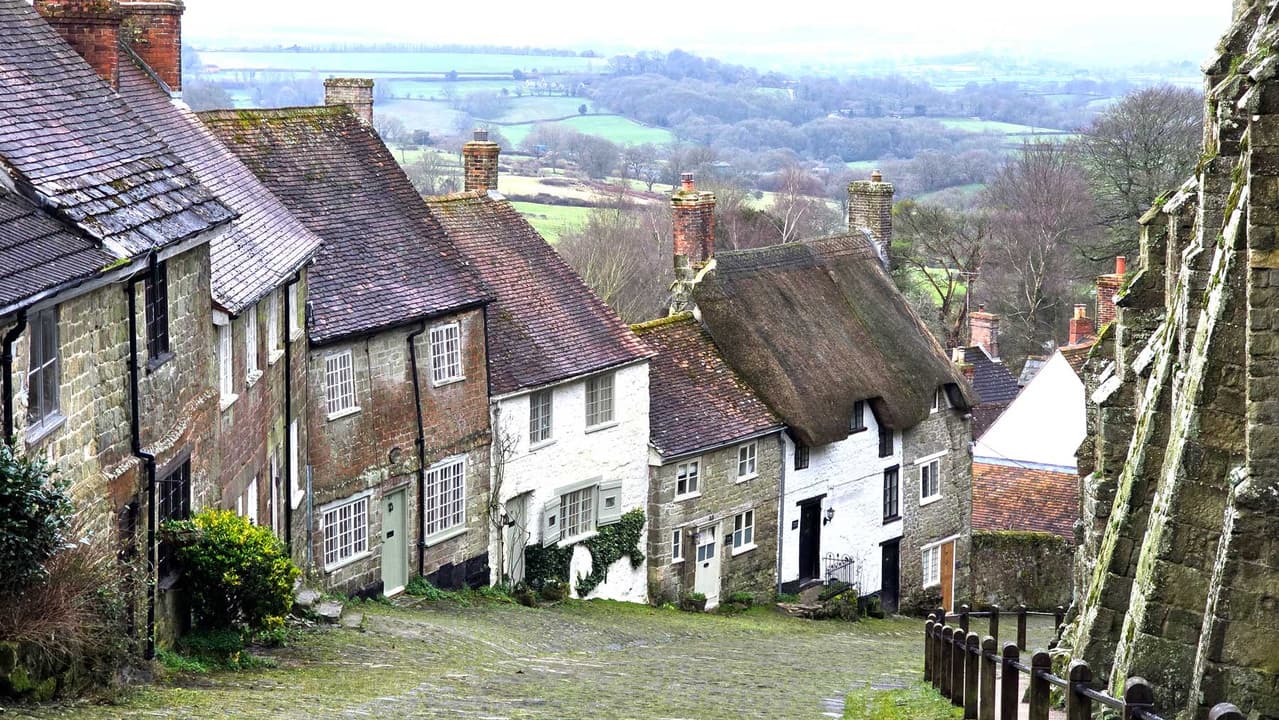
The Famous Gold Hill
No visit to Shaftesbury is complete without seeing Gold Hill, the steep cobbled street that has become synonymous with rural England.
The street's fame spread worldwide in 1973 when director Ridley Scott chose it as the location for the Hovis bread advertisement. The commercial, featuring a young boy pushing his bicycle up the hill, captured the essence of traditional English life and became one of the most beloved adverts in British television history.
The view from the top of Gold Hill, looking down the cobbled street with its thatched cottages and buttressed wall, with the patchwork fields of the Blackmore Vale stretching to the horizon, is one of the most photographed scenes in England.
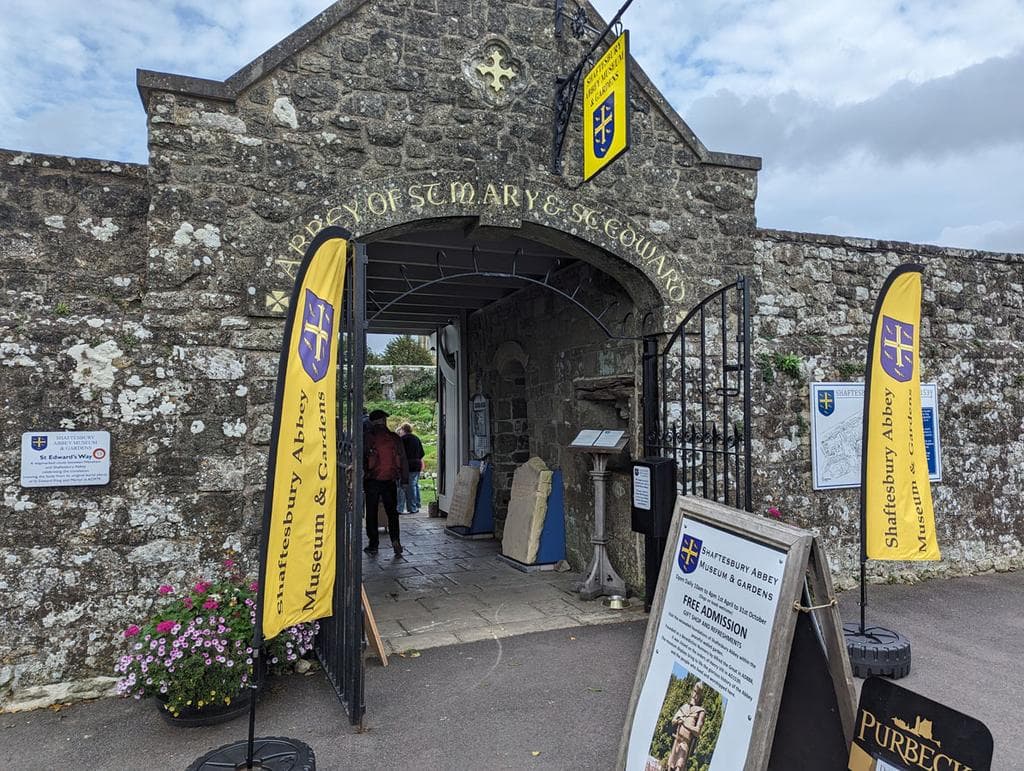
Shaftesbury Abbey
Founded in 888 AD by King Alfred the Great, Shaftesbury Abbey was one of the richest and most powerful nunneries in medieval England.
The abbey's importance grew dramatically when the relics of King Edward the Martyr were brought here in 988 AD. Edward, who was murdered at Corfe Castle in 978, was soon regarded as a saint, and pilgrims flocked to Shaftesbury to visit his shrine.
At its height, the abbey owned lands in seven counties and was so wealthy that a medieval saying claimed: "If the Abbot of Glastonbury could marry the Abbess of Shaftesbury, their heir would hold more land than the King of England."